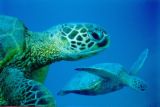
Turtles in Northern Cyprus

turtles

There are two species of turtles that nest in the sand of the Cyprus beaches, and together with other islands of the Mediterranean and the coastline of Turkey, there are conservation sites continually monitored during the laying and hatching seasons.

The Loggerhead Turtle (Caretta caretta), and The Green Turtle (Chelonia mydas) both lay their eggs in nests that can be found all round the Cyprus coast, specifically in the soft sand of Alagadi beach to the East of Kyrenia, Golden beach in the Karpaz peninsula and The Akamas peninsula in the south.

In the Mediterranean the female or hen turtle will lay a clutch of eggs between late March and early June, that varies between 70 and 150. She will nest in warm sand and the incubation period will depend on the temperature, with the peak of the hatching period between July and August.

The hatchlings emerge at night and make their perilous way to the sea. The hours of darkness offer them the greatest protection from predators, but even so the infant mortality rate is extremely high. They are at risk from predators on land as well as in the sea as they provide a tasty morsel for large fish.

The loggerheads live on a diet of molluscs, squid, flying fish and jellyfish and appear to be totally immune to the toxins of the Portuguese Man o’ War, and their powerful jaws allow them to crush clam, crab and mussel shells.

If a loggerhead turtle reaches maturity it can expect a long life span well in excess of thirty years. Instinctively, the female will return to lay her eggs on or near the beach where she was hatched, no matter how many thousands of miles she may have migrated throughout the oceans of the world before she is ready to produce her own young.

Now protected from hunting the Loggerhead is no longer killed for its shell that was used to make combs, spectacle frames and fancy boxes. They are now classified as an endangered species and their biggest threat is from fishing trawlers.

The Green Turtle, is so called, not from the colour of its shell but from the colour of the fat beneath its skin. Unlike the Loggerhead, the Green turtle is an herbivorous creature, feeding in the shallows and lagoons upon the various sea grass species. It is known to migrate long distances between feeding grounds and the beaches they hatched from. The egg laying and hatching procedure is common to all sea turtles and they have a life span of approximately 80 years.

There are peoples throughout the world for whom the Green turtle and its eggs is a delicacy. They are killed for their flesh and their eggs are stolen from the nests, thus they too are on the endangered list.

Ultimately the greatest threat to these creatures that have roamed the world’s seas for thousands of years will be the destruction of their habitats. The soft sanded beaches where they lay their eggs are constantly being destroyed by man as yet another hotel or housing estate is built close-by. That is why the conservation areas such as there are on Cyprus are vital for the continuation of the species.

In 1991 the Society for the Protection of Turtles was founded in North Cyprus and it has a keen and enthusiastic following. Information on membership can be obtained by writing to SPOT, PO Box 42, Girne, Mersin 10, Turkey. The main base is at Alagadi beach and the summer season is monitored by students of Marine Biology from universities throughout the world. Turtle hatching nights are arranged during the season and information is available at the site office close to the beach with a sign that points the way.

Key TakeAways

There are various tourist information offices in North Cyprus:

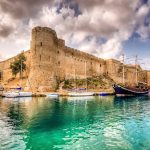
Kyrenia – in the Old Harbour
Lefkosa – by Kyrenia Gate
Famagusta – the Land Gate (the main entrance to Famagusta old town)
Ercan Airport – located inside the airport

Most electrical plugs in North Cyprus are the 3 pin type, the same as in the UK.

Occasionally, three to two pin adaptors are necessary, however this is quite rare nowadays.

North Cyprus observes the religious holidays of Islam and like the religious holidays in the Christian Church they are moveable feasts.

Ramadan is a period of fasting followed by three days of feasting called Kurban Bayram (feast of the Sacrifice). The date of Ramadan changes each year.

Other major holidays are:

New Years Day, January 1st.

Children’s Day, April 23rd.

Labour Day, May 1st.

Youth and Sports Day, May 19th. Peace and Freedom Day, July 20th.

Communal Resistance Day, 1st August.

Victory Day 30th August.

Turkish National Day, 29th October.

Independence Day 15th November, (proclamation of TRNC in 1983).

The currency in North Cyprus is the Turkish Lira, which has a constantly fluctuating exchange rate. For this reason, shopkeepers and restaurant owners are fully conversant with all major currencies and bills can be paid in UK Sterling, Euros and US Dollars as well as local currency.

If you change your money into Turkish Lira in North Cyprus, you will generally get a much better exchange rate than you would otherwise get in the UK.

There are many money exchange bureaux in all of the major towns. Major UK Credit and Debit cards are widely accepted, and can be used in cash machines, however you should ensure that you inform your bank before you travel so that they do not block your card. You should also enquire about charges to use your card abroad.

Travellers Cheques as well as Scottish banknotes are not widely accepted in North Cyprus and changing them can be very difficult.

If you have an accident, or have a medical emergency, you can visit one of the state hospitals in Kyrenia, Famagusta or Lefkosa. Private hospitals are also found in most towns.

Minor cuts and bruises will be treated usually free of charge in the state hospitals. However, major medical treatment can incur a hefty bill and it is essential that you take out comprehensive insurance cover for your holiday, and that your insurance covers you for Turkey as well as Europe. Please ensure that any pre-existing medical conditions that you may have are notified to the insurance company prior to travel. Failure to notify them may well render the insurance cover null and void.

Please note that the European Health Insurance Card (EHIC) is NOT accepted in North Cyprus.

Police: 155
Fire: 199
Forest Fires: 177
Ambulance Emergencies: 112

General Hospitals

Nicosia/Lefkosa 0392 2285441
Kyrenia/Girne 0392 815 2226/8152254
Famagusta/Magusa 0392 3662876/3665328
Guzelyurt 0392 7142125

Dialling Codes

To call a phone in North Cyprus from elsewhere you need to dial 0090 followed by either the code for landline numbers: 392 or for mobiles 542 or 533.
There are two mobile service providers in North Cyprus; KKTC Telsim which uses the 542 prefix and Turkcell which uses 533.
Mobile numbers are usually supplied with the necessary code to facilitate access.

When dialling from North Cyprus to the UK enter 0044 followed by the number required with the deletion of the initial zero.

On This Page

Explore More
Kyrenia
Famagusta
north-cyprus-karpaz-tour-3
Karpaz
Nicosia

News & Inshigts of Kyrenia

Best Travel Theme

Elementor Demos

With Love Travel WordPress Theme you will have everything you need to create a memorable online presence. Start create your dream travel site today.

Discover the World, one Full Adventure at a Time!

Our Contacts

Address

1080 Brickell Ave - Miami

United States of America

Email

info@travel.com

Phone

Travel Agency +1 473 483 384

Info Insurance +1 395 393 595

Follow us