as more people become aware of the fragility of the planet, so Eco-Tourism becomes more popular. The damage that can be done, by carbon emissions and the devastation of the rain forests, are just two examples of the destructive impact created by mankind. Natural resources have been eroded and as the population of the world increases, so do the demands upon nature, but the damage can be ameliorated, it is rectifiable. Maybe not in a hurry, but as more people take an interest in Eco or Sustainable tourism, a difference can be made to the future of the earth. But what exactly is Eco-Tourism, and how can it benefit North Cyprus?
Olive Crusher
Eco-Tourism is the tourism that is ecologically friendly and leaves no scars on the landscape of the host country. It is also called “Green Tourism” again with the emphasis on looking after the environment, conserving natural areas, learning about the local people, their activities, lifestyle and welfare.
The people who promote Eco-Tourism have a motto, “take only photographs, and leave nothing behind but your footprints.” This may seem a very simplistic view but even if you are a visitor to North Cyprus who has only come for the sun and sand in summer, there is a contribution to be made. Leave just your footprints on the beach and take your rubbish home. It is the first step to becoming an eco-tourist who is aware of the surrounding environment.
Cyprus has something for everyone; the committed hedonist who comes to sun worship, the botanist in search of rare specimens, bird watchers who come specifically during the migratory period hoping for that ‘once in a lifetime’ glimpse of the bird that has always eluded them. There are areas of sustainable Eco-Tourism in North Cyprus that encompass the conservation of the Green and Loggerhead turtles. In their nesting areas there are no large hotels, but there are plenty of small family run ‘pansiyons’ and holiday villages specially designed to cater for the visitor who wants to take back memories of a holiday with a difference.
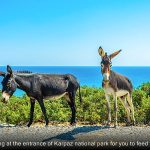
There are miles of nature trails through the mountains and the National Park of the Karpaz Peninsula where the wild donkeys roam peacefully among the juniper bushes. There are huts on stilts where visitors can be as close to nature as they wish. Right on the sea shore if that is their desire, with only the light of the moon and stars, and the serenade of the sea to lull them to sleep.
The benefit to visitors will be obvious, they will return to their jobs looking fitter, healthier, tanned to a golden perfection. They will have exercised well, eaten well, slept like logs and been enriched by the environment. The benefit to Cyprus will be even greater, because the advancement of social and environmental issues through Eco-Tourism will have a far reaching impact on the local economy.
Corek & Olive Bread
Where visitors want to be part of the landscape and watch as nature works her miracles, there is village accommodation away from the hustle and bustle of town life. Where they will use the village restaurants and enjoy the very best of Cyprus cuisine with truly local and home made dishes that use freshly caught fish and in-season farm grown vegetables from the area.
In the North Cyprus village of Buyukkonuk Eco-Tourism is being developed in a traditional setting. Situated at a midway point between the two coasts of the Karpaz peninsula, it is surrounded by verdant fields, olive groves, citrus orchards, and is central to an area that is abundantly rich in flora and fauna. In addition to the diversity of its natural assets, Buyukkonuk has been selected as the pilot project for a scheme that will develop Eco-Tourism in the Karpaz region and eventually become part of a “Global Eco-Village Network.”
The Buyukkonuk Eco-Tourism Association extends a warm welcome to everyone who visits their village. In the Eco-Tourism Visitor Centre, or at the Delcraft Centre on the opposite side of the road, there is always someone to give advice or explain how village crafts are made. These crafts may encompass bread making, weaving, basket making etc. Woodworking, using the natural resources that are sustainable, for example olive wood that is a by-product of the tree when it is regularly pruned, cheese making and some of the delicious dishes that are part of truly Cypriot cuisine, dishes that are so often cooked in the large clay ovens to be found in the gardens of most village houses. Recipes that have been handed down through generations and are not to be found in town restaurants. There are activity days when demonstrations are given on bread and cheese making. These are very rewarding especially as participants get a chance to sample the finished products!
Heating the oven
Of course not all aspects of village life are the same as they were a hundred years ago, The donkey that was once called the “Cyprus tractor” has now been replaced by genuine tractors and work gets done a little faster. However there are still many “small village” traditions; there are olives to gather and process for their oil. There are goats and cows to be milked and their product turned into yogurt and cheese. Villagers still earn a living from the pursuit of these domestic chores and in addition they will weave cotton, and make a variety of baskets from the local reed. Baskets that will vary in size from the small ones that are used during the process of making hellim cheese, to a basket large enough to hold a good supply of logs for the fire.
The village has its own olive mill that is run as a co-operative. This is a modern mechanised mill, a long way in evolution from the old mills that were powered by donkey. One of the original mills has been restored with a grant from USAID and is open to the public. On display is an example of the wheel that crushed the olives, and the press which extracted the oil. There are also photographic exhibition boards detailing the history of olive growing from 2500BC, and the stages of the restoration process.
In the olive harvest season that covers the months of September to November the village mill is a hive of activity as everyone who owns a few trees gathers their olives and brings them for crushing. Olive oil is such an important part of the Cypriot diet that a house without a supply of oil to last it through the year is a poor one indeed.
In addition to the production of olive oil, there is another all-important commodity that has been produced in Cyprus for hundreds of years. The black treacle-like syrup called ‘pekmez’ that is made from the carob pod that has been crushed and boiled in water into a reduction. It is then bottled and used in a variety of dishes from soups and stews to a spread for ice-cream.
Craft Shop
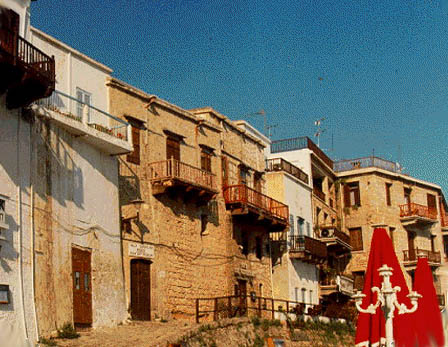
The village has a rich and historical mix of architecture. There are many traditional arched houses and numerous churches. There are narrow streets to explore and traffic is not as a general rule plentiful. There is however one day of the year when this rule does not apply and that is the day in October that is designated Eco Day. It is a one day festival incorporating as many village traditions as it is possible to find time for, including folk dancing and local music, stalls selling local goods that will range from agricultural products and home made food, cotton headscarves, dog baskets, log baskets, bread baskets etc.
Bed and breakfast accommodation is available in the village and can be booked for a single night or a longer stay.
For further information contact Lois Cemal (0090 392 3832038) email delcraft@superonline.com
For further information on the Buyukkonuk Eco-tourism Association visit http://www.EcoTourismCyprus.com